Chapter 3, Part 2: I Guess We’ll Have To Evolve Too 🦕
What Jurassic Park teaches us about Transformative Learning and the beautifully nonlinear way human beings change.
Welcome to The SHINE Chronicles ✨
A weekly newsletter where I break down stories you already know and love through the lens of The SHINE Cycle™ (See, Hear, Involve, Nurture, Evaluate), my framework for understanding how people and teams develop, stall, and finally move.
[You can read a full breakdown in the free workbook here.]
Each issue, we pull back the curtain on a familiar story and ask: where is this team and what would it take to get them unstuck?
In Chapter 3, Part 1, we traveled to Isla Nublar to examine John Hammond and the dangerous difference between genuinely running a leadership cycle and creating a convincing masquerade of one.
But there is another SHINE Cycle unfolding in another part of the park. While Hammond spends the film trying to prove that his vision does not need to change, Dr. Alan Grant is slowly discovering that one of his own most firmly held conclusions might be wrong.
And I promised you Grant would be worth the wait.
I've Decided Not To Endorse Your Park
The island may be the classroom, and the dinosaurs a catalyst, but the subject of Grant's SHINE Cycle is his relationship with children... and his discovery that they might not be as unpleasant as he previously decided they are.
That is the thing I love about SHINE: it is not only about leadership and team development.
It is about human development.
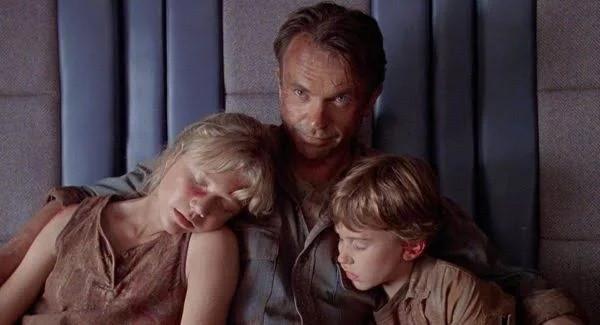
Alan Grant goes from telling Ellie Sattler at their Montana dig site that children are noisy, messy, expensive—and some of them smell—to sitting with Tim and Lex asleep against him during the helicopter ride off the island. They have just survived the most terrifying experience of their lives, and even with their grandfather nearby, Grant is the person they feel safe enough to sleep against.
And he lets them.
So how did we get here?
In Part 1 of this analysis, I used Bruce Tuckman’s stages of team development to help explain how SHINE supports a group as it moves through uncertainty, conflict, collaboration, performance, and reflection.
Grant is not leading a team through that developmental process, however. His transformation is internal. What changes over the course of the film is the frame through which he understands children, relationships, and possibly even the future he can imagine with Ellie.
For that kind of development, Jack Mezirow’s Transformative Learning Theory gives us a more useful map.
Mezirow studied how adults change deeply held frames of reference: the assumptions, expectations, and beliefs through which we interpret ourselves and the world. Transformative learning often begins when an experience no longer fits comfortably within the perspective we already have. Mezirow called this a disorienting dilemma.
The experience creates tension between what we believe and what we are now encountering. We are invited to examine our assumptions, consider perspectives we previously dismissed, experiment with unfamiliar roles or behaviors, and eventually integrate a broader understanding into the way we live.
Most of us will not experience that process while stranded in a theme park full of escaped carnivores, but the principle still applies.
When SHINE is turned inward:
See becomes the process of recognizing the assumptions, patterns, and blind spots through which we are operating.
Hear asks us to remain open to information and experiences that complicate those assumptions.
Involve moves growth out of our heads by requiring us to participate in a different way of thinking, behaving, or relating.
Nurture gives that emerging behavior the patience, support, and repetition it needs to become more natural.
Evaluate allows us to reflect on what the experience revealed, revise our previous conclusions, and reenter our lives with a changed perspective.
That does not mean Grant proceeds through five tidy stages in linear order. Personal development rarely works that way. He moves forward, backward, and sideways through the cycle. The steps loop because human beings do not evolve by completing a checklist.
We evolve through experience.
You Want to Have One of Those?
Grant begins the film believing he has already Evaluated children.
After using a velociraptor claw to terrify a boy who challenged his explanation at the dig site, he walks away with Ellie and presents his case. Children are noisy, messy, expensive, and prone to unpleasant smells. He has observed enough of them to consider the matter settled.
He does not like children.
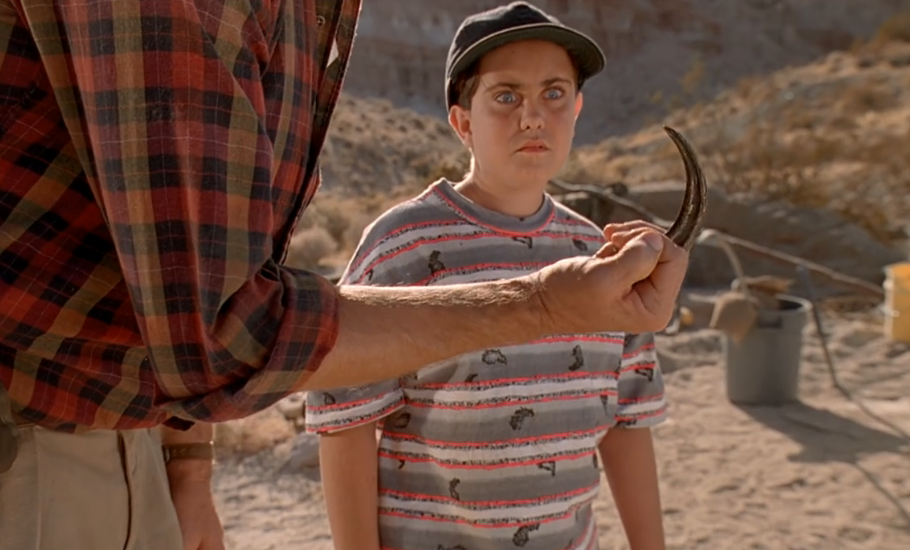
Ellie’s reaction suggests that the conclusion matters beyond this single conversation. Grant’s feelings about children are not merely a funny personality quirk. They represent something larger about the life they might—or might not—build together.
The problem is not that every piece of Grant’s evidence is false. As the mother of four, I can tell you that children absolutely ARE noisy, messy, expensive, and smelly. His mistake, though, is assuming that these observations tell him everything worth knowing. About all children.
Because Grant knows children as a category. He knows them as small humans prone to interruptions, questions, noise, and as an audience that does not always respect his expertise.
He does not yet know any children as individuals. He doesn't yet know Tim or Lex.
Mezirow’s theory is especially useful here because transformative learning does not begin with a person who knows nothing. It begins with a person whose existing knowledge has become too narrow for the experience now confronting them.
Grant does not need to erase everything he knows. He needs enough new evidence to realize that his conclusion was built from an incomplete data sample.
'Cause It'd Be Good For You
Grant’s first encounter with Tim and Lex does nothing to challenge his conclusion. If anything, Tim appears determined to confirm every complaint Grant has made.
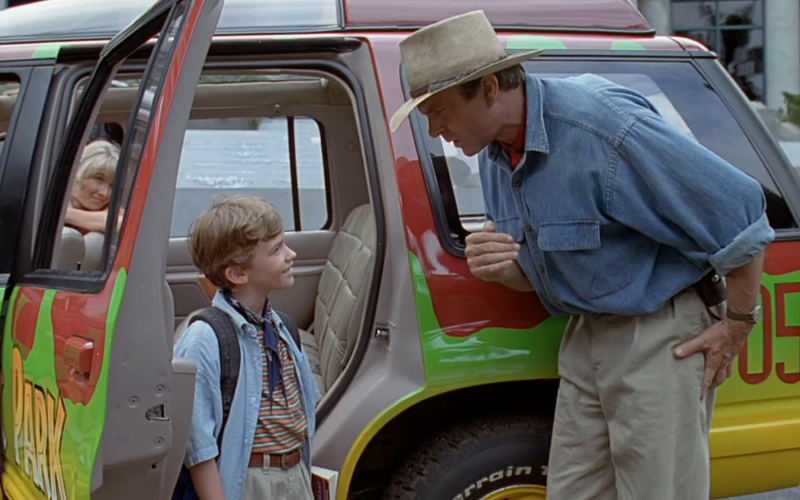
As the group prepares to begin the park tour, Malcolm eagerly announces that he intends to ride with Ellie. Grant immediately moves to follow them, but Tim cuts him off. H explains that he's read Grant’s book and launches into questions and theories about dinosaurs while following Grant toward one Explorer. Then straight through it when Grant attempts to escape through the opposite door.
Grant finally asks which vehicle Tim is planning to ride in.
“Whichever one you are.” - Tim Murphy
Tim’s interest is sincere. He does not see Grant as an unwilling babysitter or an adult he has been assigned to tolerate. He sees someone whose work matters to him, and he wants to share the experience with the person who helped shape his fascination with dinosaurs.
Grant, however, cannot See past the behavior that already supports his conclusion. Tim is talking too much, asking too many questions, and following him everywhere. The child’s enthusiasm registers as an intrusion rather than an attempt at connection.
So Grant places Tim in the front Explorer, closes the door, and heads toward the other vehicle.
Running directly into Lex.
She explains that Ellie said she should ride with Grant because it would be good for him. Grant looks back at the woman who knows exactly what she has done.
Ultimately, Grant gets what he wants though... Tim and Lex ride with Gennaro in the front Explorer, while Grant rides behind them with Ellie and Malcolm.
That matters because personal transformation does not begin merely because an alternative experience becomes available. We can be shown new information, invited into unfamiliar relationships, and presented with opportunities to behave differently while remaining firmly committed to avoiding them.
Tim reaches toward Grant through shared intellectual curiosity. Lex approaches him because Ellie has deliberately encouraged the connection. Grant is being invited into Involve, but he is not ready to participate. And he still has enough control over the situation to preserve the distance his existing beliefs require.
For now.
The first real challenge to Grant’s certainty arrives shortly afterward, before the fences fail and the dinosaurs escape.
During the tour, Grant spots something in the distance and jumps from the moving vehicle without hesitation. The others follow him down the hill toward the sick Triceratops. Lex stumbles along the way, and Grant instinctively catches her by the hand.
The immediate problem is solved, but Lex does not let go.
She looks up at Grant with bright eyes and an unmistakably pleased little smile. Grant smiles back and tries to reclaim his hand, but she holds tighter. He is noticeably uncomfortable with the unexpected intimacy, while Ellie watches the entire interaction with a knowing expression.
This time, Grant cannot close a vehicle door between himself and the child reaching toward him.
He does not exactly welcome the connection, but he does not forcibly reject it either. He continues down the hill with Lex’s hand in his, participating in a relationship his conscious beliefs have not yet made room for.
That tiny moment demonstrates how nonlinear personal growth can be. Involve has arrived before Grant has consciously moved through See or Hear. His behavior is experimenting with another way of relating before his understanding has caught up.
Lex is no longer merely one of Hammond’s grandchildren or another specimen from the category of human that Grant dislikes. For a few moments, she is a person who trusts him to steady her and then chooses to remain connected after the practical need has passed.
The interaction does not transform him by itself. It creates a moment his existing conclusion cannot entirely explain. Grant believes children are an intrusion, yet this particular child has reached for him, and some part of him has responded with gentleness before his mind can assemble an argument against it.
Personal transformation is often built from moments like this. Long before we consciously admit that our understanding may be changing, our behavior begins testing another possibility.
But That's Not What I'm Gonna Do
Grant’s blind spot becomes more obvious later, after Ellie remains behind with the sick Triceratops and the tour vehicles continue without her.
When the power fails near the T-Rex paddock, Grant checks on the Explorer carrying Tim, Lex, and Gennaro. He returns to Malcolm and reports that its radio is also out. Malcolm asks whether the children are all right and Grant admits he didn't ask.
The moment is not evidence that Grant is cruel or wants the children to suffer. It simply has not occurred to him to imagine the situation from where they are sitting. He can See the stalled vehicles, the storm, and the technical problem unfolding around them, but he has not developed the reflex to See the children inside that problem.
Malcolm tells him that children get scared, and Grant still does not understand why this situation should frighten them. To him, it is a temporary interruption in the power. The danger has not yet become visible, so he assumes there is nothing emotional to respond to.
Then the T-Rex emerges.
Gennaro abandons the children, the Explorer is attacked, and Grant’s tidy perspective collides with a reality it cannot contain. “Children” become: Lex, screaming and in shock because the adult assigned to protect her has run away; and Tim, trapped and injured inside a vehicle that eventually ends up in a tree.
When Grant reaches Lex after the attack, she is not merely frightened by the dinosaur. She is terrified that Grant will leave her too.
This time, Grant recognizes what is happening beneath her words. He reassures her that he is there, tells her he will look after her, and explains that he is going to help Tim rather than abandon them. He cannot remove the danger, but he can make sure she understands that she is not facing it alone.
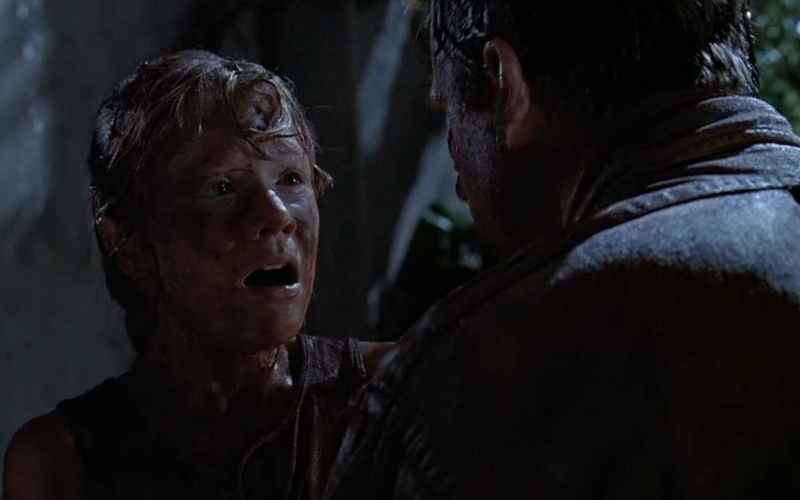
That is See, Hear, and Nurture occurring almost simultaneously. Grant notices the fear, understands the experience underneath it, and responds in a way designed for this specific child rather than for his generalized idea of what children are.
When he climbs into the tree, grumbling the whole way, he finds Tim shaken and embarrassed that he has thrown up. Grant does not ridicule him, dismiss the embarrassment, or demand he just be obedient and get out of the car. He quietly promises not to tell anyone and offers his hand again.
As they climb down, Grant continues adjusting his approach. His first attempts at reassurance do not always land. He tells Tim that the climb is not so bad, and Tim immediately tells him that it is. Grant compares it to coming down from a tree-house, only to learn that Tim’s father (like his own) had never built him one. Grant does not suddenly become a flawless child psychologist. He tries something, listens to the response, and changes course.
That is what SHINE looks like in motion. Hear is not merely allowing another person to speak; it is letting what they say affect what you do next.
When the Explorer falls through the branches after them, Grant places his body over Tim in an attempt to protect him. They somehow end up back inside the vehicle, and the absurdity of the situation gives Grant another opportunity to connect rather than control.
Tim: "Well... we're back... in the car again."
Alan: "But... at least you're out of the tree."
He uses humor to help Tim metabolize what has happened. Earlier in the film, Grant used his knowledge of dinosaurs to frighten a child who annoyed him. Now the same dry wit becomes a form of reassurance.
Grant has not stopped being Grant. His personality is not being erased by development. He is discovering a more relational way to use what was already there.
These Are Herbivores
After the immediate danger has passed, Grant, Tim, and Lex continue into the park and eventually settle in another tree for the night.
This scene is where the difference between survival and relationship becomes unmistakable. Grant is no longer simply moving the children away from danger. He is sharing an experience with them.
He is learning that Tim is curious, knowledgeable, enthusiastic, and far more perceptive than Grant’s likely impression of “child who asks too many questions” allowed him to recognize. He is learning that Lex is wary, intelligent, affectionate, and capable of reaching toward connection even after being abandoned by an adult.
Grant is not merely protecting them anymore. He is beginning to get to know them.
This is why Involve matters so much in personal transformation. Grant could not have reached this new understanding by thinking harder about children. He had to become involved in an actual relationship. He had to listen to their questions, carry the responsibility of their trust, and allow their personalities to complicate the conclusion he had already reached.
As they prepare to rest for the night, Lex and Tim nestle beside him, and although their closeness initially surprises him, he makes room. He has answered their questions, mediated their sibling bickering, and explained the dinosaurs they hear around them.
When Lex asks what he and Ellie will do now, since living dinosaurs will change the field to which they've devoted their lives, his answer is meant to apply to the paleontology... but poetically, also applies to him as a person in this moment.
“I don't know. I guess... I guess we’ll just have to evolve too.” - Dr. Alan Grant
As he considers the question, he's holding the velociraptor claw he carried from Montana... the same claw he used to terrify a child at the beginning of the film. After laughing at Tim’s dinosaur jokes and promising Lex that he will remain awake while they sleep, he lets the claw fall from the tree.
It is a beautifully quiet piece of Evaluate.
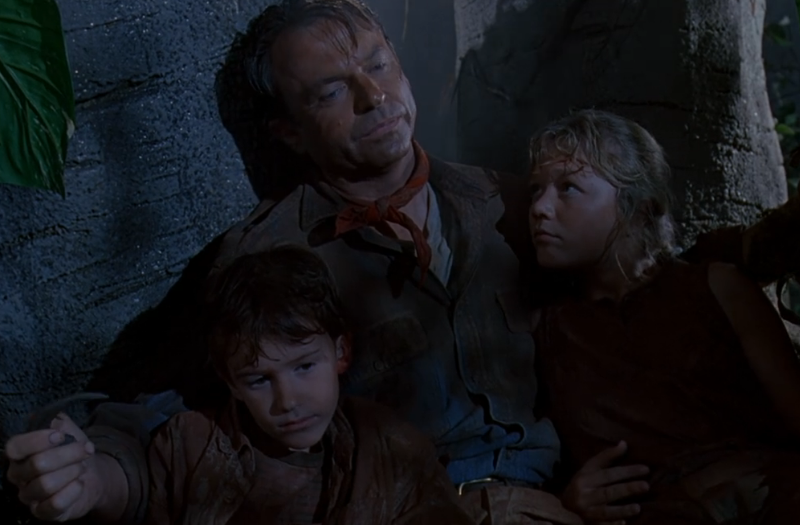
The experience is nowhere near over, and Grant has not consciously announced that his assumptions about children are changing. Reflection has simply entered the cycle while he is still inside it.
That is what makes SHINE a cycle rather than a rigid progression. Evaluation does not always wait politely at the end. Sometimes new understanding appears in the middle, changes how we approach the next experience, and sends us through the other steps again with a broader perspective.
Can You Tell Me What They Are?
By morning, Tim and Lex are curled beneath Grant’s arms.
The physical arrangement is the visible result of everything that happened during the night. The man who began the film explaining why he disliked children has become the person beside whom these two children can sleep peacefully.
As they continue toward the visitor center, the group stumbles across a nest filled with broken dinosaur eggshells. Grant immediately recognizes the significance: the dinosaurs are breeding.
Tim reminds him that Hammond said all the dinosaurs were girls, while Lex asks Grant to explain his reference to amphibian DNA. Grant thinks back to the tour film, connects the frog DNA used to complete the dinosaurs’ genetic code with the ability of some frogs to change sex in single-sex environments, and reaches a new conclusion.
“Malcolm was right. Look... Life found a way.” - Dr. Alan Grant
This moment works as a miniature version of Transformative Learning in its own right. Grant begins with an accepted frame of reference: every dinosaur in the park is female, so breeding is impossible. Then he encounters evidence that the existing explanation cannot contain. Rather than dismissing the eggshells, defending the original claim, or pretending the contradiction does not exist, he becomes curious about it.
He Sees the evidence in front of him. He Hears Tim’s reminder of what they were told and Lex’s request for an explanation. He mentally revisits the information from the tour and Evaluates the conclusion against what they now know.
Then he changes his mind.
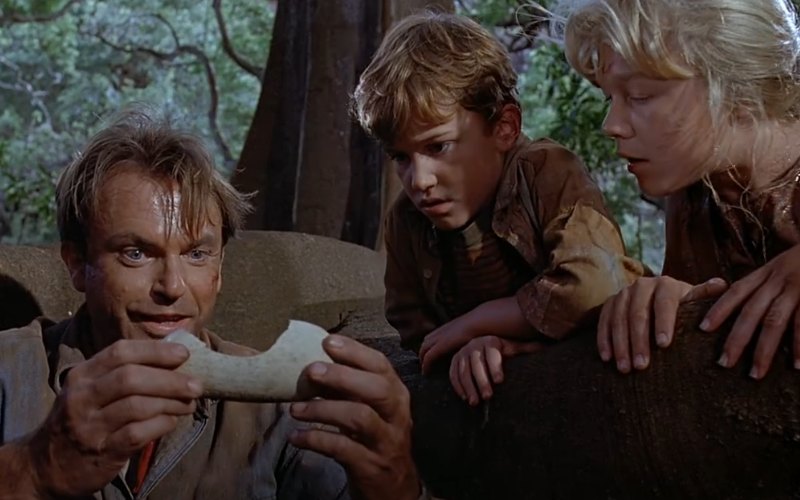
The scene also creates an important contrast between Grant and Hammond. Hammond repeatedly receives evidence that challenges his assumptions, but he resists allowing it to alter the story he is telling about the park. Grant encounters a single clutch of eggs and immediately admits that Malcolm was right.
That openness to correction is central to Grant’s personal transformation too. The broken shells are proof that life has developed beyond the limits Hammond designed for it. Tim and Lex are becoming proof that children exist beyond the limits of the category Grant created for them.
In both cases, the evidence does not merely add information to his existing understanding. It requires him to expand the frame itself.
The children are part of this discovery rather than passive observers standing nearby. Tim contributes the contradiction that makes Grant examine the park’s claim more closely, and Lex’s question invites him to explain the connection he has made. Their curiosity helps move the reasoning forward.
Grant is no longer treating their questions as irritating interruptions. He is thinking with them.
That pattern continues when the Gallimimus herd approaches and Grant asks Tim to identify the dinosaurs. He does not announce the answer or use the moment to demonstrate his own expertise. He turns to Tim because he recognizes that Tim knows something relevant.
This is Involve in one of its most genuine forms. Grant is not assigning Tim a decorative role while quietly retaining ownership of everything that matters. He allows Tim’s knowledge to become part of how the group understands the danger moving toward them.
The child who once irritated him with questions has become someone Grant can investigate the world alongside.
Big Tim, the Human Piece of Toast
At the electric fence, Grant goes even further and plays with the children, pretending the powerless wires have shocked him. The joke mirrors the velociraptor demonstration at the dig site, but the relationship surrounding it has changed completely.
At the beginning of the film, fear creates distance and restores Grant’s authority over a child who challenged him. At the fence, the same dry humor creates connection. Tim laughs, Lex is unimpressed, and Grant now knows them well enough to understand that those reactions can coexist.
Then the power returns while Tim is still climbing.
He is thrown from the fence and stops breathing. Grant catches him and desperately attempts to resuscitate him, moving back into Nurture in its purest form. Tim is no longer Hammond’s grandson or a responsibility Grant inherited because no better adult was available. The possibility of losing him is personal.
Grant stays with him, keeps trying, and does not stop until Tim breathes again.
Nurture is what gives a new way of relating enough repetition to become a part of us. Grant has now reassured, protected, taught, listened to, played with, and fought for these children. Caring for them no longer resembles an unfamiliar role he is reluctantly acting out.
It is beginning to look like who he is.
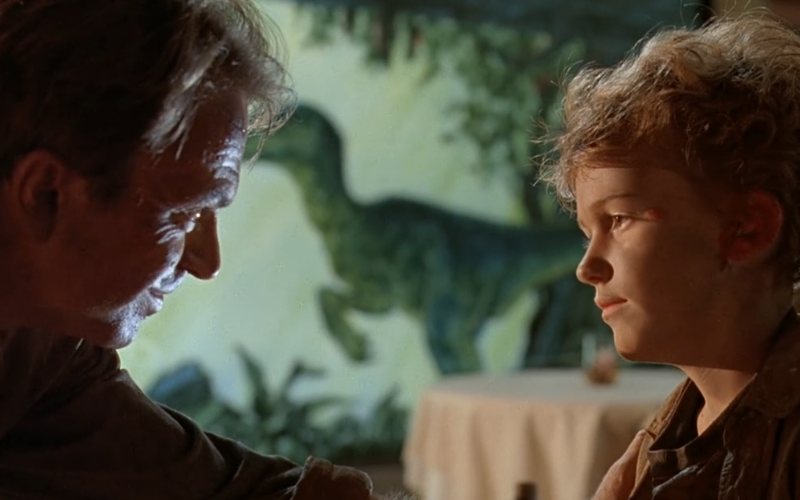
It's a UNIX System. I Know This.
Lex’s moment at the computer completes another important part of Grant’s transformation.
When she recognizes the park’s system, her knowledge becomes essential to everyone’s survival. Grant and Ellie are occupied trying to keep the raptor from entering the room; there is no carefully facilitated delegation exercise or thoughtful speech about trusting young people.
Lex knows what to do, so her knowledge becomes the plan.
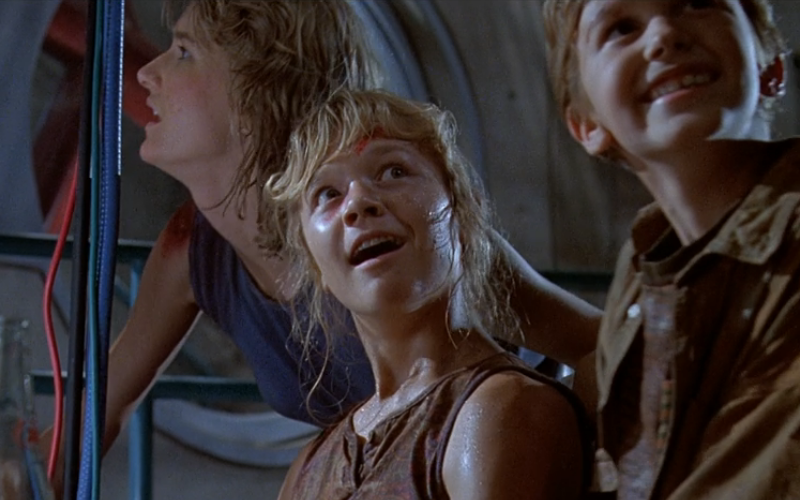
By this point, Tim and Lex are not helpless passengers Grant is escorting through the park. They are active participants whose knowledge, observations, choices, and capabilities affect the outcome. More importantly, they are not simply observers of Grant’s SHINE Cycle.
They are helping run it.
Tim and Lex show Grant who they are. Their questions, fears, humor, and observations give him something new to Hear. Their capabilities require him to Involve them. Their vulnerability draws out his capacity to Nurture, while their trust nurtures a part of him that had never been required to emerge.
Every interaction gives Grant more evidence with which to Evaluate the conclusion he brought onto the island.
That mutuality is what makes SHINE a framework for human development. We do not grow only through the ways we teach, lead, or support other people. We also grow through the ways they challenge our assumptions, invite unfamiliar parts of us forward, and refuse to fit inside the categories we have created for them.
Sometimes the person we are guiding becomes the person who exposes our blind spots.
Sometimes offering someone else safety reveals a capacity within us that we did not know was there.
Mr. Hammond, the Phones Are Working
Let's fast forward to the helicopter.
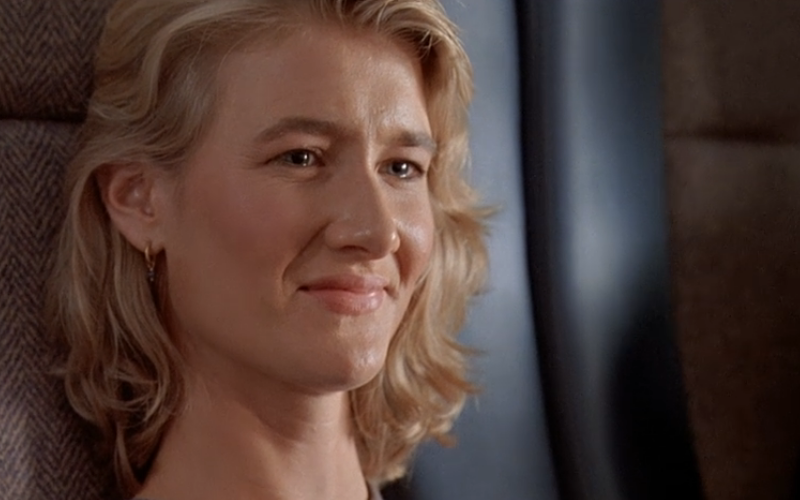
Tim and Lex are asleep against Grant with the complete, unconscious trust of children who feel safe. Across the aisle, Ellie watches him.
She can remember the man at the dig site listing his carefully reasoned objections to children. His obvious desire not to ride with either of them on the tour. Lex refusing to release his hand on the way to the Triceratops and the discomfort Grant could not hide.
Now he is holding both children without resistance.
Grant opens his eyes, and he and Ellie exchange a smile. There is no dramatic confession, formal debrief, or triumphant “I told you so.” They both understand.
In Mezirow’s language, this is reintegration: the changed perspective has begun to enter the person’s life and identity. Grant is no longer temporarily experimenting with a new way of relating because the circumstances require it. The new behavior has become natural enough that he is not thinking about it at all.
In SHINE, this is the final Evaluate of the film. Grant has gathered new evidence, lived inside experiences that challenged his previous assumptions, tried an unfamiliar relational role, and developed enough confidence within it for that role to begin feeling like part of him.
The SHINE Cycle™ did not turn Grant into a completely different person. He remains practical, prickly, dry, and probably much more comfortable discussing velociraptors than his feelings. What changed was the frame through which he understood himself and the people around him. And Grant, being a scientist, allowed the evidence to change his conclusion.
Grant did not arrive on Isla Nublar looking for personal growth. He was not questioning his beliefs about children, searching for a new identity, or trying to become more emotionally available. As far as he was concerned, he had already reviewed the evidence and reached a reliable conclusion.
Then he met Tim and Lex.
That is what makes Grant’s transformation such a powerful example of both The SHINE Cycle™ and Transformative Learning. Genuine change often begins when lived experience presents us with something our existing perspective cannot fully explain.
We encounter evidence that does not fit neatly inside the story we have already accepted, and we must decide whether to dismiss it or allow it to expand our understanding.
Grant’s growth was not linear. He did not complete See, graduate to Hear, and proceed obediently through the remaining steps. He moved back and forth through the cycle as each new experience revealed something his original assumptions had missed.
That is one of the most beautiful—and occasionally inconvenient—truths about personal development: we do not grow only through introspection.
Sometimes another person reveals our blind spots simply by refusing to fit inside them. Sometimes we discover a new capacity because a moment asks something of us before we feel ready. And sometimes our behavior begins evolving long before the story we tell about ourselves catches up.
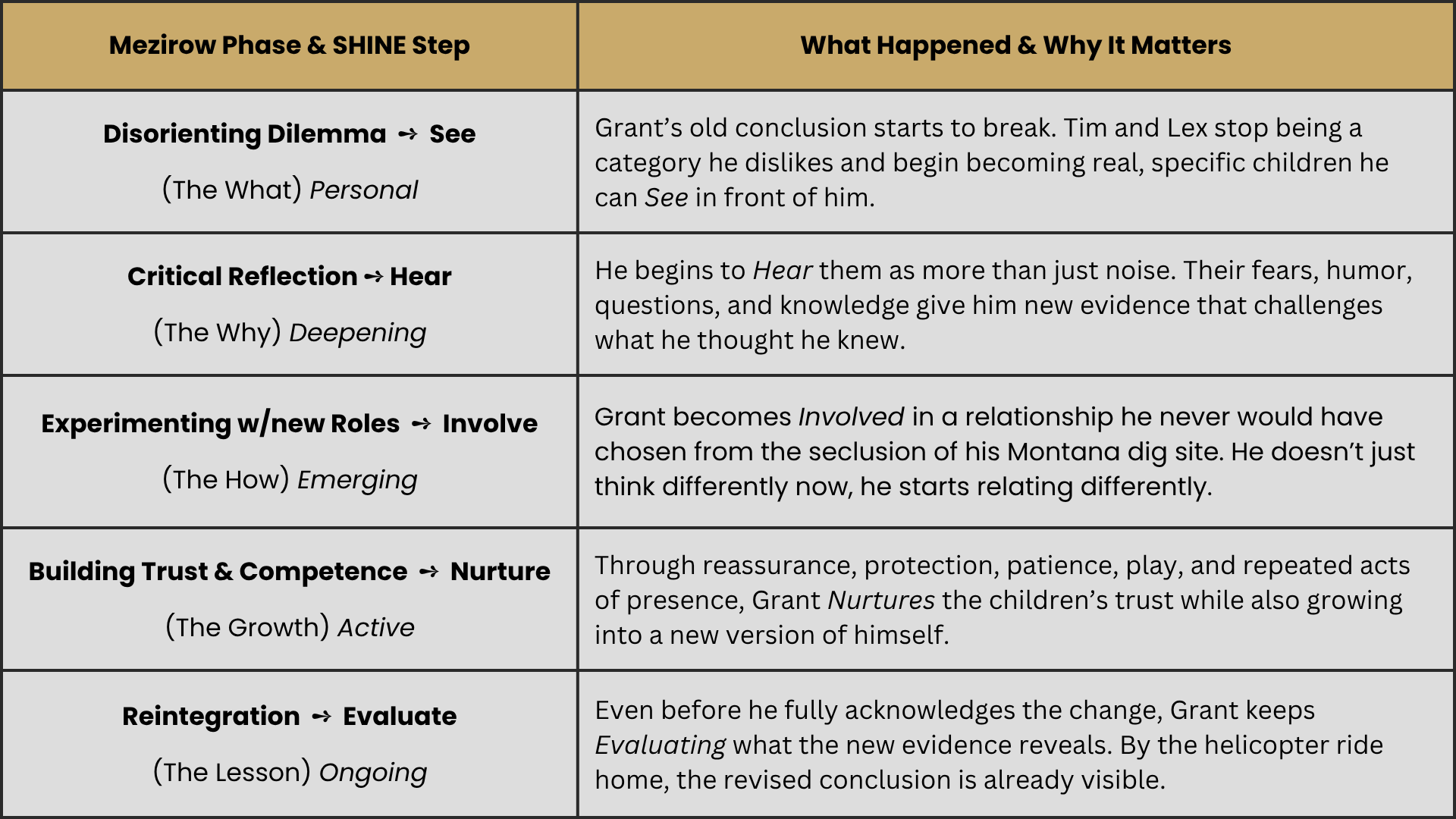
TABLE 1 - GRANT’S GROWTH ARC
✨ What To Take Into Your Week
As you continue into this week, consider where your own conclusions might be resting on incomplete evidence:
➺ What belief about yourself, another person, or the way life works have you treated as permanently settled?
➺ What new information have you been dismissing because it does not fit comfortably inside that belief?
➺ Where might life already be inviting you to experiment with a different way of responding, relating, or understanding yourself?
Personal growth does not always arrive as a dramatic breakthrough. More often, it appears in small moments: an unexpected hand held a little longer than necessary, a question asked instead of an answer announced, or a relationship we make room for despite our discomfort.
Eventually, enough of those moments become new evidence.
If we are willing to See it, Hear it, become Involved with it, Nurture what begins emerging, and honestly Evaluate what it teaches us, that evidence can change our conclusions. It might even change us.
Grant did not become someone entirely new. He allowed himself to evolve.
💬 Comment below: What belief have you had to reconsider after life gave you new evidence?
Thank you so much for joining me for Chapter 3, Part 2. Keep an eye out for the next issue and until next time, remember:
You have permission to evolve—and permission to SHINE.
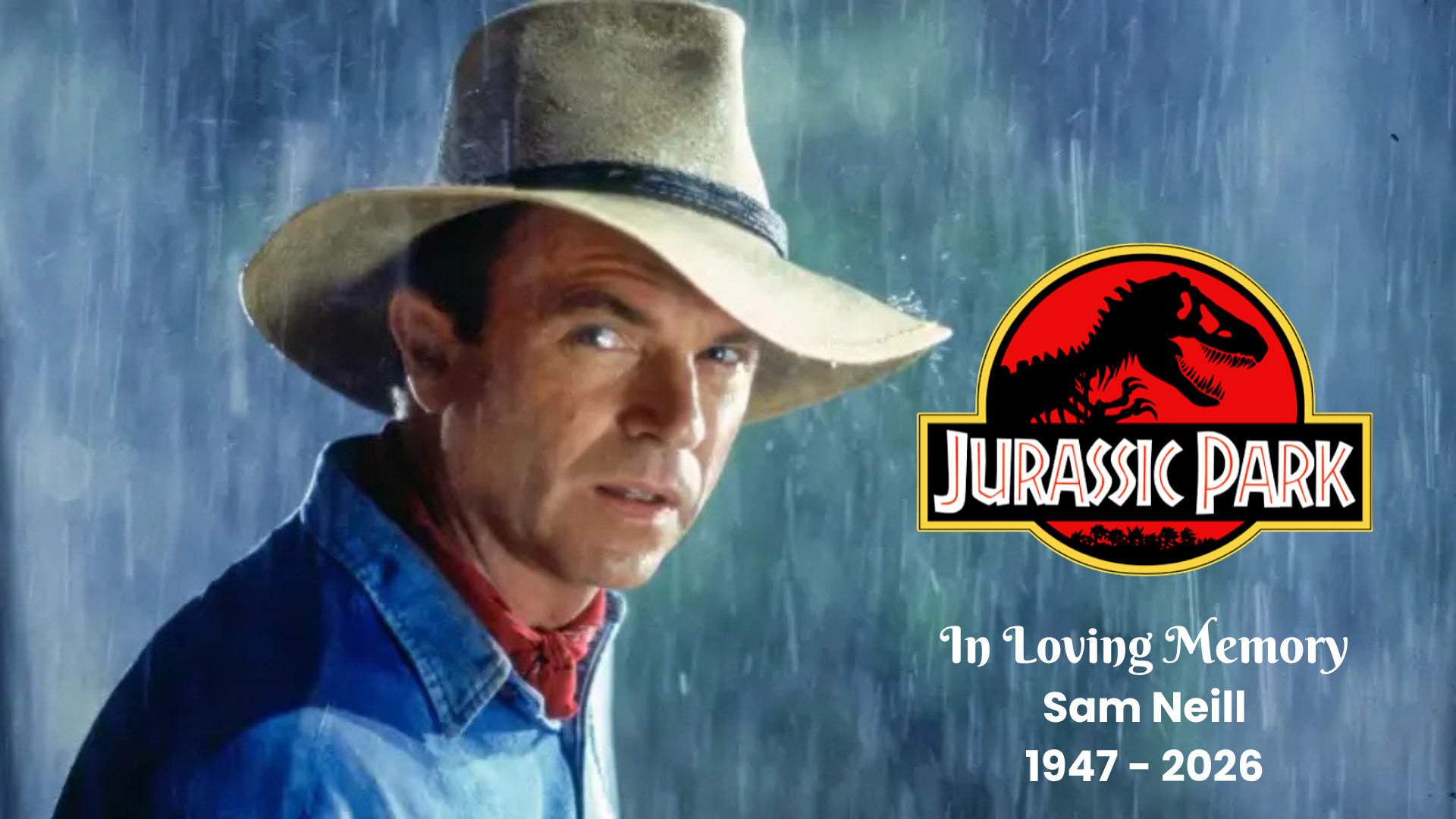
This Issue is dedicated to Sam Neill
Who gave us a reluctant, prickly, deeply human scientist—and one of cinema’s quietest, most moving examples of personal transformation.
We saw you. We heard you. And we are so grateful you got Involved.
Curious where your team is in The SHINE Cycle™?
I do for real teams what I do with these stories... find the moment that explains everything. Book a 90-min Diagnostic. ✨
New here? The SHINE Cycle™ is a framework for understanding how people and teams move from confusion to competence and what leaders can do to guide that journey with intention. Download the FREE Workbook to learn more.