Chapter 1: A Star Wars Story 🔭
What Rogue One reveals about the step most leaders skip... and the cycle that never really stops.
Welcome to The SHINE Chronicles ✨
A weekly newsletter where I break down stories you already know and love through the lens of The SHINE Cycle™ (See, Hear, Involve, Nurture, Evaluate), my framework for understanding how people and teams develop, stall, and finally move.
[You can read a full breakdown in the free workbook here.]
Each issue, we pull back the curtain on a familiar story and ask: where is this team and what would it take to get them unstuck?
For our very first issue, and in honor of May the 4th, the people have voted. We're starting in a galaxy far, far away...
There's a particular kind of tension in Rogue One: A Star Wars Story that I didn't fully appreciate the first time I watched it.
At the time, I was pulled in by the scale of everything. The urgency. The stakes. The sense that every decision carried weight far beyond the moment it was made. It's a story set in the middle of a war, and it moves like one: fast, reactive, constantly adjusting to forces that never quite settle.
But when I came back to it later, what stayed with me wasn't the action.
It was the pause.
There's a scene where the Rebel Alliance leadership convenes and Jyn Erso delivers news that should change everything: her father, Galen — an Imperial scientist — deliberately engineered a fatal flaw into the Death Star's reactor core. Not a rumor. Not a theory. A flaw built in on purpose, waiting to be found and exploited.
It's the kind of moment that should move a team forward.
And for a brief second, it feels like it will.
"Rebellions are built on hope."
You can sense the shift in the room. The possibility of action enters the conversation. There's a quiet recognition that this might be the opening they've been waiting for.
But then, just as quickly, that momentum fades.
The conversation becomes cautious. Careful. Questions begin to surface... not to deepen understanding, but to slow things down. What if it's a trap? What if the information is incomplete? What if acting now puts everything at risk? Each question is reasonable. Responsible, even. But together, they create something else.
They create hesitation.
I've been in that room before. Everyone has enough information to move, they just... don't. Decisive action gets tabled for more "favorable" circumstances, unknown futures. The risks of moving immediately are deemed too high. Not worth the potential loss.
For a long time, I read this scene the way most people do — as a story about a team that understood everything and still couldn't commit to action. A failure of courage, or consensus, or momentum.
But I've come to think the real reason runs one step deeper than that.
The Step That Was Skipped
Here's the detail that changes everything.
The Rebel council never actually watched Galen Erso's message.
Jyn did. She was the one who saw her father's face, heard his voice, felt the weight of what he'd sacrificed to send it. She witnessed the message directly — his reasoning, his regret, his certainty that the flaw was real and findable.
What the council received was Jyn's account of it. Her testimony. Her interpretation of something she experienced and they did not.
In The SHINE Cycle™, the first stage is See — and it's foundational for a reason. See isn't just about awareness. It's about shared visibility. When a leader demonstrates The What so clearly that everyone in the room can picture the same outcome, they create a common reference point. A shared target. Something the team can orient around together.
The Rebel council didn't have that.
They had Jyn's words about something she had seen. And Jyn, at this moment, was a criminal the Alliance had conscripted under duress — the daughter of a man they had long considered an Imperial collaborator. Someone they wanted eliminated. They were being asked to launch a massive, potentially suicidal military operation on the secondhand account of someone with every personal reason to want to believe Galen was a hero not a threat.
They weren't just refusing to act. They were refusing to act on something they hadn't truly seen. And that's not cowardice. That's actually a reasonable response to an incomplete SHINE Cycle.
Because when See is skipped — or secondhand — everything that comes after it is built on unstable ground. You can explain The Why all day. You can invite participation. You can nudge and encourage and make the case with every tool you have. But if people haven't genuinely seen The What for themselves, they'll hesitate at every subsequent step. Not because they lack commitment. But because they're being asked to commit to something that doesn't yet feel fully real to them.
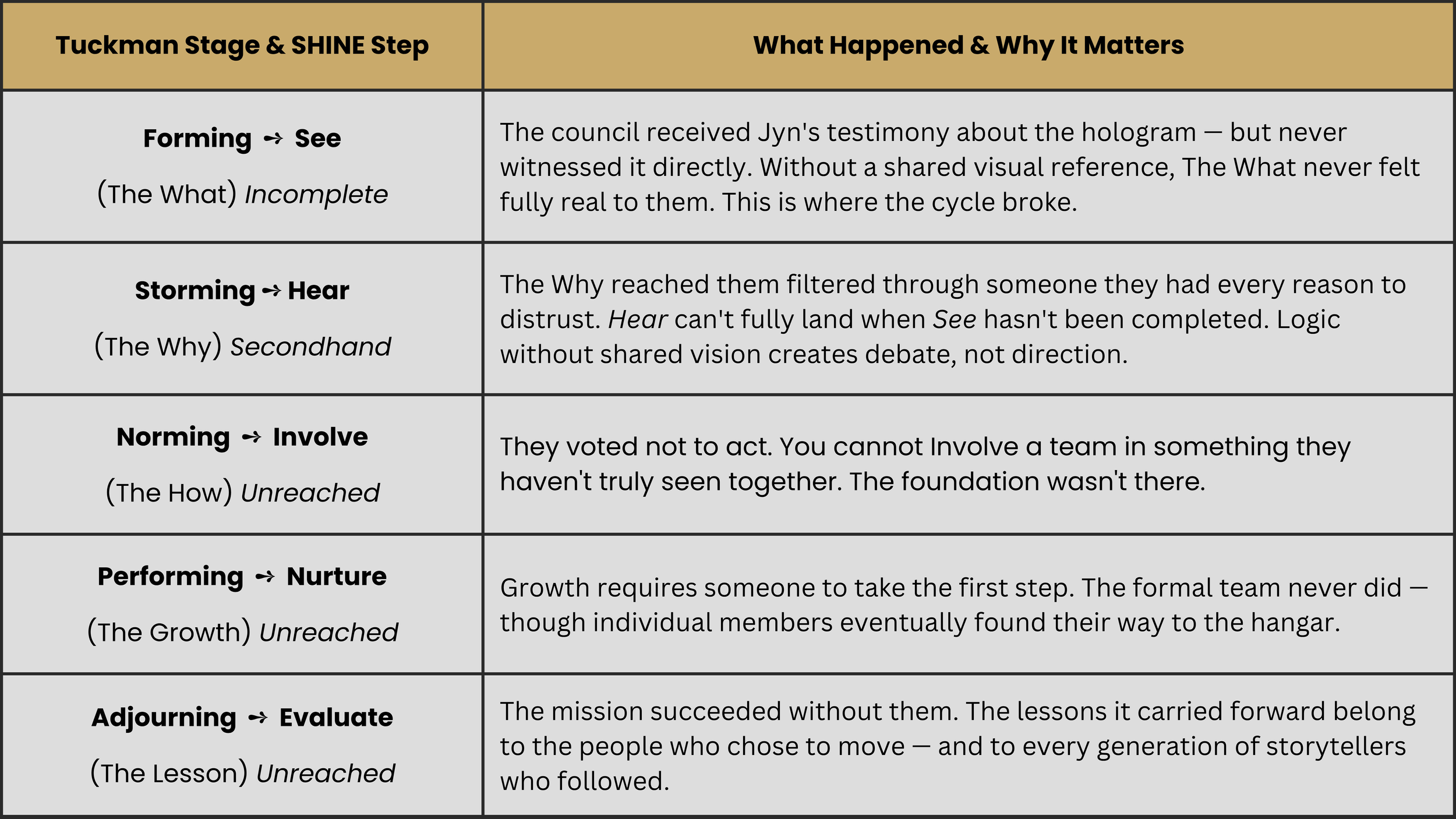
TABLE 1 - WHERE THE REBEL COUNCIL WAS IN THE SHINE CYCLE™
The Flip
What makes this scene richer still is what was happening on Jyn's side of the room, because the positions in this story don't stay fixed.
At the beginning of the film, Mon Mothma is the one pulling Jyn into the mission. Jyn wants nothing to do with the Rebellion. She's been surviving on her own for years, owing nothing to anyone. She is, by her own admission, in it for herself. When Saw Gerrera asked seeing the Imperial flag reigning across the galaxy, her answer is telling:
"It's not a problem if you don't look up."
By the time the council convenes, she's no longer resigned to apathy and survival. She's moved through SHINE... personally, internally, and across the course of a single mission. She Saw the hologram directly. She Heard her father's voice and understood his Why in a way no summary could replicate. She was ready — more than ready — to Involve herself fully. So she steps forward. She makes the case. She asks the council to move.
And Mon Mothma, who opened the film by doing the asking, is now the one who cannot cross the threshold.
But Wait — It's Not That Simple
Here's where I want to slow down for a moment, because there's something about this story that most leadership frameworks don't make room for.
The stages don't only move forward.
Psychologist Bruce Tuckman described team development as a progression — Forming, Storming, Norming, Performing, Adjourning — and we tend to talk about it as a ladder. You climb the rungs. You reach Performing. You've arrived.
But real teams don't work that way. A disruption like a betrayal, a mission change, a moral conflict, a reorganization... can all send a team or an individual sliding back into an earlier stage overnight. The model is a cycle, not a staircase. And Rogue One shows us exactly what that looks like.
Consider Cassian Andor.
By every measure, Cassian is a Performing operative. He has been fighting for the Rebellion nearly his entire life. He knows the cost of this war intimately. Not as an idea, but as a lived reality. He follows orders. He gets the job done. He is the Alliance's instrument, shaped and sharpened over decades of sacrifice.
Then he receives his orders for the Jedha mission: use Jyn to get to Saw, confirm rumor of Imperial super weapon, find and eliminate Galen Erso.
He goes to the Imperial facility on Eadu. He finds Galen. Gets him in his sights.
And he can't pull the trigger.
That moment of disobedience doesn't just complicate his mission. It throws him back into Storming — not with his team, but internally. He's in conflict with his orders, his identity, his understanding of what it means to serve a cause he's given everything to. When the Alliance attacks Eadu and kills Galen anyway, that Storming deepens. He returns to base carrying something unresolved.
But before then — there's the argument on the ship.
Jyn comes at him hard. She's furious about the lie, about the mission she wasn't told the full truth of, about what ultimately happened to her father. She feels ready to step directly into Involve — but she's aimed at the conflict, not the actual cause.
And Cassian's response stops her cold.
"You're not the only one who lost everything."
(I'll admit here that I have Cassian's backstory from Andor to lean on for some of this insight...)
He has been in this fight since he was six years old. He's lost so many people to this war. And he has done terrible things in service of it. He doesn't need two days in the field to tell him what the war costs. This isn't a dismissal — it's the most complete version of See and Hear that Jyn has received from another human being so far. Her father may have given her The What and The Why. But Cassian shows her the real weight of them, the weight he has been carrying over a lifetime.
Something shifts. Her anger doesn't disappear, but it finds a better target.
That scene is Jyn's fully stepping into Involve... not at the hologram, but here, on a stolen Imperial ship, after an argument she thought she was going to win.
The Spark and The Bridge
After the disappointing council meeting, Jyn is still determined to fight, but tells Chirrut, Baze, and Bodhi she doesn't believe the four of them is quite enough. And then Cassian arrives... with a whole group of volunteers.
"They were never going to believe you. — But I do. I believe you."
This matters more than it might appear on screen.
Jyn could ignite the mission. She had the vision, the conviction, and the willingness to move first. But she didn't have the institutional standing to recruit anyone. She was still, in the eyes of most people in that base, a criminal conscript with a personal stake in the outcome.
Cassian had the credibility. When he said he was going, people who had served alongside him had reason to follow. He had Normed his way back... not to the Alliance's mandate, but to a clearer personal line... and then he did something quietly extraordinary: he Normed the group around that same line.
He was the bridge between Jyn's individual commitment and the team that formed around it.
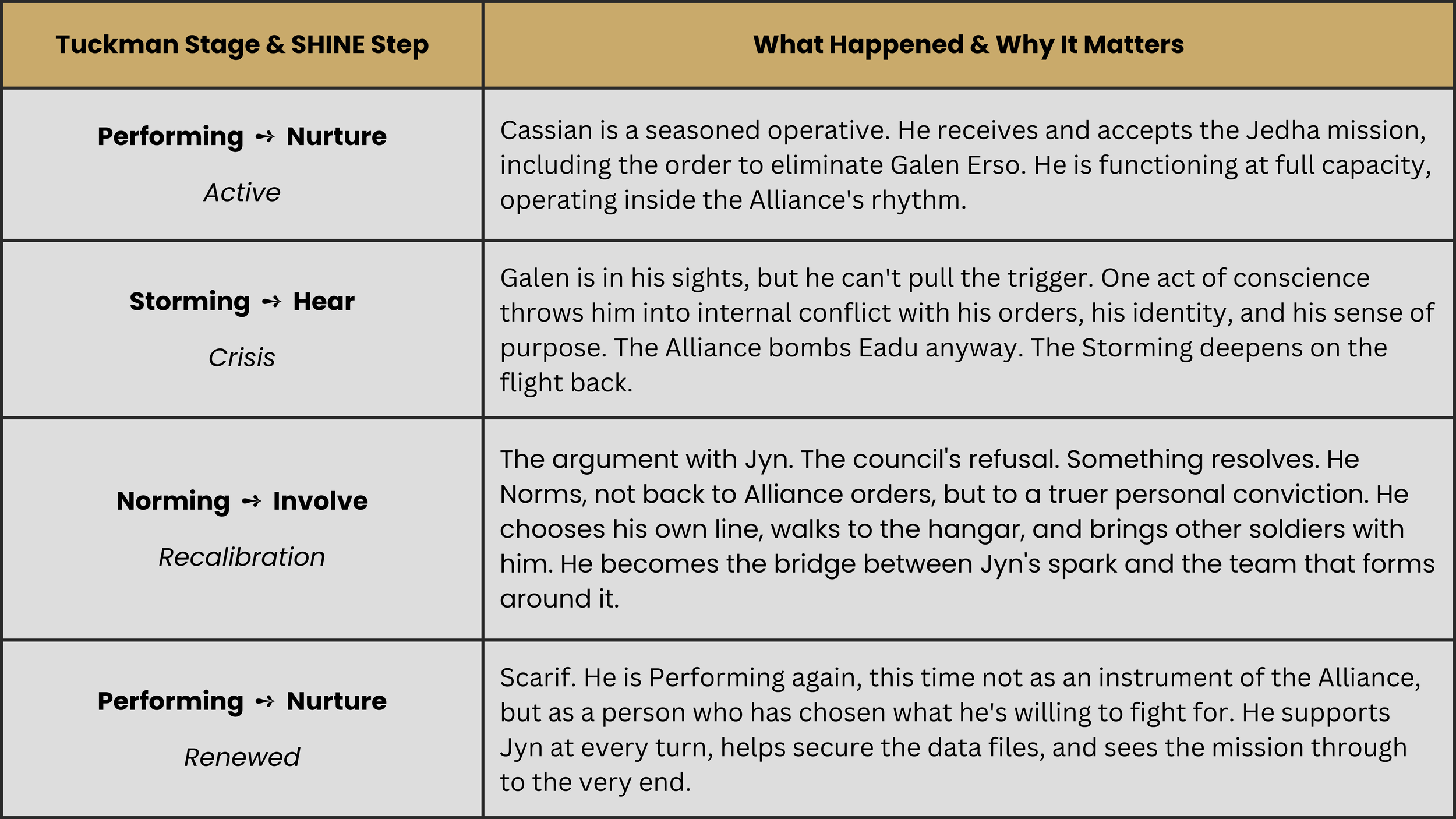
TABLE 2 - CASSIAN'S ARC: RECALIBRATING TO A TRUER NORTH
This is the thing most leadership models quietly skip over: the backslide isn't a failure. It's information.
Cassian was Storming because something real happened, something that demanded he reckon with who he was and what he actually believed. If he hadn't gone back through that friction, he never would have arrived at the conviction that made him someone worth following to Scarif.
The same is true for your teams. When someone who has been Performing suddenly seems to be Storming again, the instinct is often to treat it as regression. A problem to fix. A slide backward on a ladder they'd already climbed.
But what if it's not a regression? What if it's a recalibration?
What if the friction here is the cycle doing exactly what it's supposed to do?
What To Take Into Your Week
The mission to Scarif is messy. Improvised. Unstable. Plans shift mid-execution. People make decisions in real time with incomplete information and no guarantee of survival. By most traditional definitions, it doesn't resemble a high-performing team.
And yet it works.
Because each person takes ownership of a piece of the mission. Jyn and Cassian retrieve the data file for the Death Star. K-2SO holds the vault door so they have more time to get it. Bodhi, Chirrut, and Baze each play a part in establishing the transmission link so the signal can get out, with Admiral Raddus and his forces providing crucial support. No single person carries the whole outcome. But together — informally, imperfectly, and without a mandate — they move through Involve and into Nurture in real time, each stepping up to support whoever needs it next.
The formal team remained stuck because they never completed See together. The informal team, built around shared visibility and chosen commitment, crossed every threshold the Council couldn't.
So here are the three questions I want you to sit with this week.
1: Did everyone actually See this? — When a team is stalling, before you push harder on commitment or urgency, ask whether everyone has genuinely witnessed the same thing, or whether some people are working from someone else's description of someone else's vision.
2: Who is your Jyn, and who is your Cassian? — Most teams need both. The person who sees clearly enough to go first and the person with enough relational credibility to bring others along. Sometimes that's the same person. Often it isn't. Both roles matter.
3: Is this Storming a recalibration? — The next time someone on your team seems to be sliding backward, pause before you intervene. Ask whether the friction might be the cycle working, whether the person in the middle of it might be on their way to a truer, more committed version of Performing than they've ever been before.
The SHINE Cycle™ isn't a ladder or a checklist. It's a rhythm. One that both teams and individuals move through again and again, each time with a little more clarity, a little more trust, and a little more of themselves committed to the work.
Rogue One ends with the Death Star plans in Leia's hands and a single whispered word:
Hope.
That hope didn't come from a team that had all the information and the formal authority to act. It came from the ones who had truly Seen — and chose to move.
💬 Comment below: Which of the three questions lands hardest for you right now — See, the roles, or the recalibration?
Thank you so much for joining me for Chapter 1, keep an eye out for the poll later this week to help decide the next movie, and until then...
May the Force — and a little SHINE — be with you. ✨
Curious where your team is in The SHINE Cycle™?
I do for real teams what I do with these stories... find the moment that explains everything. Book a 90-min Diagnostic. ✨
New here? The SHINE Cycle™ is a framework for understanding how people and teams move from confusion to competence and what leaders can do to guide that journey with intention. Download the FREE Workbook to learn more.